
Last Updated: November 19, 2026
Quick Summary
A garage door opener battery backup is a rechargeable battery that keeps your opener running when household power goes out. It lets you open or close the door without a working outlet, so you can still get in and out during an outage. Backup runtime is limited to a handful of door cycles, not days.
- Test the battery backup once or twice a year so you know it works.
- Backup runtime is rated in door cycles, so check your model’s label or manual.
- Heavy, poorly balanced doors drain the battery faster and cut the number of cycles.
- Replace the battery when tests show slow operation or it reaches its published service life.
- Confirm opener model and battery type before buying a backup kit for an existing opener.
**Is your garage door ready for a power outage?**Lone Star Garage Solutions helps New Braunfels homeowners choose and install battery-backup-ready openers.
How a Garage Door Opener Battery Backup Works
A garage door opener battery backup is a rechargeable battery that keeps your opener running when household power goes out. When household power fails, the battery takes over and lets you open or close the door without a working outlet.
Check the manufacturer’s manual for the specific charging and runtime details on your model, since they vary.
Keeping Your Garage Accessible During a Power Outage
Without backup power, a standard opener is dead weight when the power fails. Many homeowners then end up pulling a manual release cord and lifting a heavy door by hand, which is awkward and can be unsafe. A battery backup lets you use the remote, keypad, or wall button as usual.
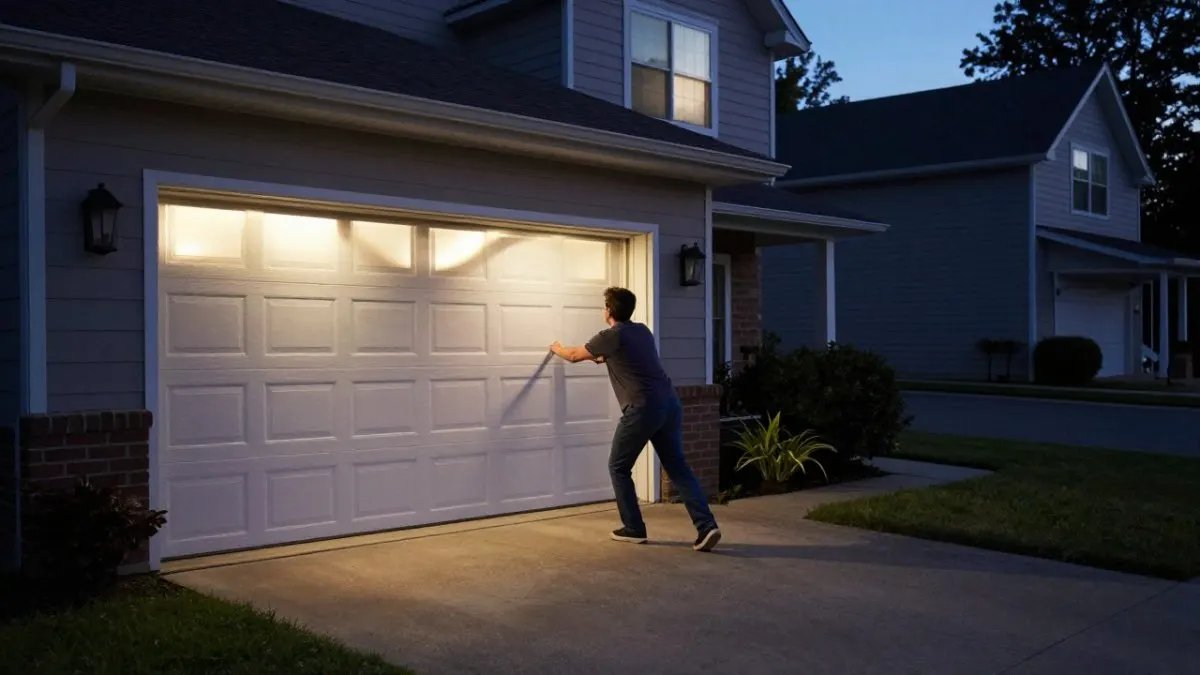
Before an outage, test the backup once or twice a year so you know it works. If you need to reset the opener after power returns, follow these steps to reset a garage door opener after a power outage. Keeping the door accessible matters most when you need to leave for work, get a car out, or reach your home in bad weather.
Safety and Security Benefits When Household Power Fails
A closed garage door also acts as a security barrier, which is one more reason to keep it operable during an outage.
Manual lifting carries real risk. A heavy door can fall if a spring or cable is worn, and you are often working in the dark. If the door itself is sticking or unbalanced, the opener will struggle, and that is worth a professional look.
How Long Does a Garage Door Backup Battery Last?
Runtime is the question homeowners ask most, and the honest answer is that a backup battery is built for a handful of door cycles, not for running your garage for days. Backup systems are typically rated in door cycles rather than hours, and the number varies by opener brand, battery capacity, door weight, and how well the door is balanced. Check the label or manual for your specific model rather than assume a number.
Several factors shrink that number in real use:
- Door weight and balance. A heavy or poorly balanced door draws more current per cycle, so the same battery delivers fewer openings. A door that binds or has a worn spring is the most common reason a backup underperforms.
- Temperature. Battery chemistry slows in cold and degrades faster in sustained heat. An uninsulated garage that bakes in summer or drops near freezing in winter will see reduced capacity and slower charging. Expect the gap between rated and real-world cycles to widen in extreme temperatures.
- Cycle frequency. Opening and closing back-to-back drains the battery faster than spaced-out use, because the motor draws a surge on each start.
- Battery age and charge history. A battery that has sat partially discharged for months holds less. Keeping it on its charger between outages matters more than most people realize.
During a long outage, treat the backup as a way to get a few essential cycles, move a car, secure the house, leave for work, not as a substitute for grid power. If you need the door to work repeatedly over multiple days, a dedicated opener battery alone will not carry you; that is a broader home backup question.
Battery life expectancy is separate from runtime. Even a battery that is rarely called on will age out, so check the rated service life for your unit. Once a battery stops holding a charge or delivers noticeably fewer cycles than it used to, it needs replacing. Replacement and routine upkeep are covered below.
Pros and Cons of Battery Backup Systems
Pros:
- The door works during a power outage, so you can get in and out.
- It avoids manual lifting of a heavy door in the dark.
- The closed door keeps the garage secure when the power is off.
- Many newer openers include backup as an option, so it is easy to add.
Cons:
- Runtime is limited, so it is not a solution for multi-day outages.
- The battery is an extra part that eventually needs replacing.
- Performance drops in extreme temperatures.
- Older openers may not be compatible, so a retrofit needs checking first.
For most households, the convenience and security are worth the added cost, especially where outages are common. If you rarely lose power, a standard opener with a good manual release may be enough.
Choosing the Best Garage Door Opener with Battery Backup
When comparing options, look at the drive type, the motor’s power, and whether the backup is built in or an add-on. Our buyer’s guide on the best garage door opener covers belt versus chain drives and horsepower needs in more detail. A heavier door needs a stronger motor, and a belt drive tends to run quieter in an attached garage.
Compatibility is the key question for an existing setup. A backup kit made for one brand may not fit another. If you are replacing the whole door along with the opener, our installation team can help you pair a new door with a battery-backup-ready system.
| Option | Power Source | Best For |
|---|---|---|
| Standard opener | Mains power only | Homes with reliable power |
| Add-on battery backup | Rechargeable battery kit | Existing openers that support a kit |
| Built-in backup opener | Integrated battery | New installs in outage-prone areas |
Garage Door Opener Battery Backup Replacement and Upkeep
A backup battery is only dependable if you test it before you need it. A simple twice-a-year check, ideally before storm season and again before winter, is a practical routine.
How to test safely:
- With the door closed and the area clear, unplug the opener from the wall outlet (or switch off its dedicated breaker).
- Press the wall button or remote and let the door complete one full open and close cycle on battery power.
- Watch for a slow, labored, or incomplete cycle, that is a sign the battery is weak or the door is binding.
- Plug the opener back in and confirm the battery indicator (if your model has one) shows it is charging.
Signs the battery is failing:
- The door moves noticeably slower on battery than on household power.
- The opener beeps or flashes a battery fault code after a test.
- The battery no longer holds a charge between tests, or the indicator stays low after a full recharge.
- You get fewer cycles than you used to before the door stops responding.
Watch out: never test the backup by pulling the manual release and lifting the door by hand while standing under it, a worn spring or cable can let a heavy door drop. Test with the opener, and if the door feels heavy or binds, stop and have it inspected before trusting the backup.
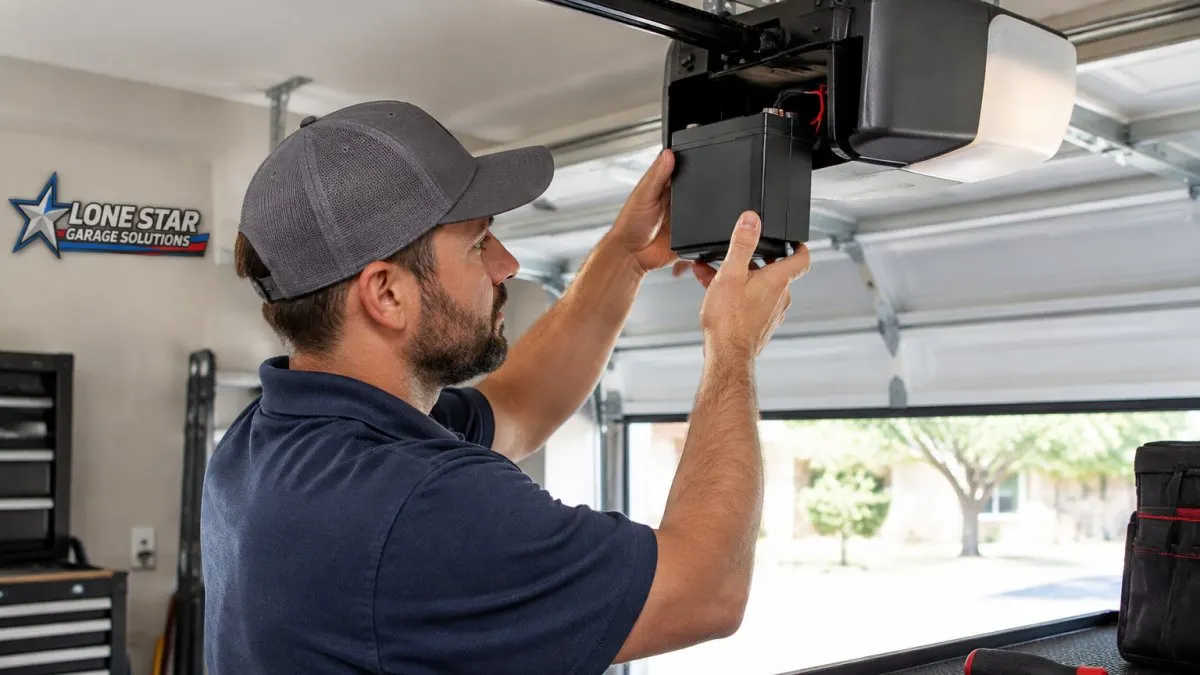
Replacement decisions. Battery replacement is a wear item, not a repair, and it is the main recurring cost of owning a backup system. The right time to replace is when a test shows reduced cycles or slow operation, or when the battery reaches the service life published for your model, whichever comes first. Do not wait for a total failure, because that is exactly when you will need it. Match the replacement to the opener’s specified battery type.
Compatibility and retrofit check. Before buying a replacement or adding a backup to an existing opener, confirm three things: the opener’s model number, whether the manufacturer offers a backup kit for that model, and the battery type the kit specifies. A kit made for one brand or generation often will not fit another, so a retrofit is a check-first decision rather than a universal add-on.
If the door itself is sticking, the springs or cables are worn, or the opener is struggling, have a professional inspect it before adding a new battery, a fresh battery will not fix a mechanical problem, and a binding door will drain any backup faster.
Get a Quote for a Battery Backup Upgrade in New Braunfels
If your garage door opener is aging or you want to stay mobile during power outages, a battery backup upgrade is a practical step. At Lone Star Garage Solutions, we help New Braunfels homeowners with garage door openers, with flexible financing available on qualifying projects.
If your opener or door is showing its age, it may be time to consider replacement. Contact Lone Star Garage Solutions for a quote.
Frequently Asked Questions
Do I need a battery backup for my garage door opener?
A battery backup is not required, but it is worth considering if you rely on the garage as your main entry point or have no other way to get a vehicle out during an outage. Without it, a standard opener stops working when power fails, and you would need to use the manual release cord to lift the door by hand. Households with elderly residents, people who work from home, or anyone who needs reliable access at all hours tend to get the most value from a backup system. A local garage door professional can check your current opener and help you decide.
How long will a backup battery last on a garage door opener?
Backup battery life depends on the battery type, how often the door is used during an outage, and the temperature where the battery is stored. Many battery backup systems are designed to run a limited number of open and close cycles on a single charge, so the number of cycles you get can vary. Batteries also degrade over time, so replacing them on a regular schedule helps keep the system dependable. Check your opener’s manual for the stated cycle count and recharge time, and have a technician test the battery during routine maintenance.
Can a garage door opener battery backup work during a power outage?
Yes. A battery backup keeps the opener running for a set number of cycles when household power goes out, so you can open or close the door without using the manual release. The battery charges while the power is on, so it is ready when an outage starts. Keep in mind that runtime is limited, and extreme heat or cold can reduce battery performance. If you depend on the system during long outages, plan for how you will get in and out once the battery is depleted.
How do you replace a garage door opener backup battery?
Start by disconnecting power to the opener and confirming the correct replacement battery model in your owner’s manual. Remove the old battery from its holder, install the new one with the correct orientation, and reconnect power. Test the door through several open and close cycles to confirm the system works. Lone Star Garage Solutions can help you get a quote for this service.