
Last Updated: November 21, 2026
Quick Summary
Off track repair costs range widely depending on damage. A simple realignment with a sound track often runs $200 to $400, while a broken spring adds $400 to $550. Comparing quotes by scope, not just total, is the best way to judge a fair price.
- Stop using the door as soon as you see it off track to avoid further damage.
- A simple realignment with a sound track is the least expensive scenario, often $200 to $400.
- A broken spring replacement typically costs $400 to $550 and raises the total.
- Confirm each quote covers the same scope, including springs, cables, and balancing.
- Check home warranty or homeowners insurance coverage before paying out of pocket.
What Usually Happens When a Garage Door Comes Off Track
A garage door that jumps off its track is one of the most common problems we see in New Braunfels, and an off track repair rarely happens on its own.
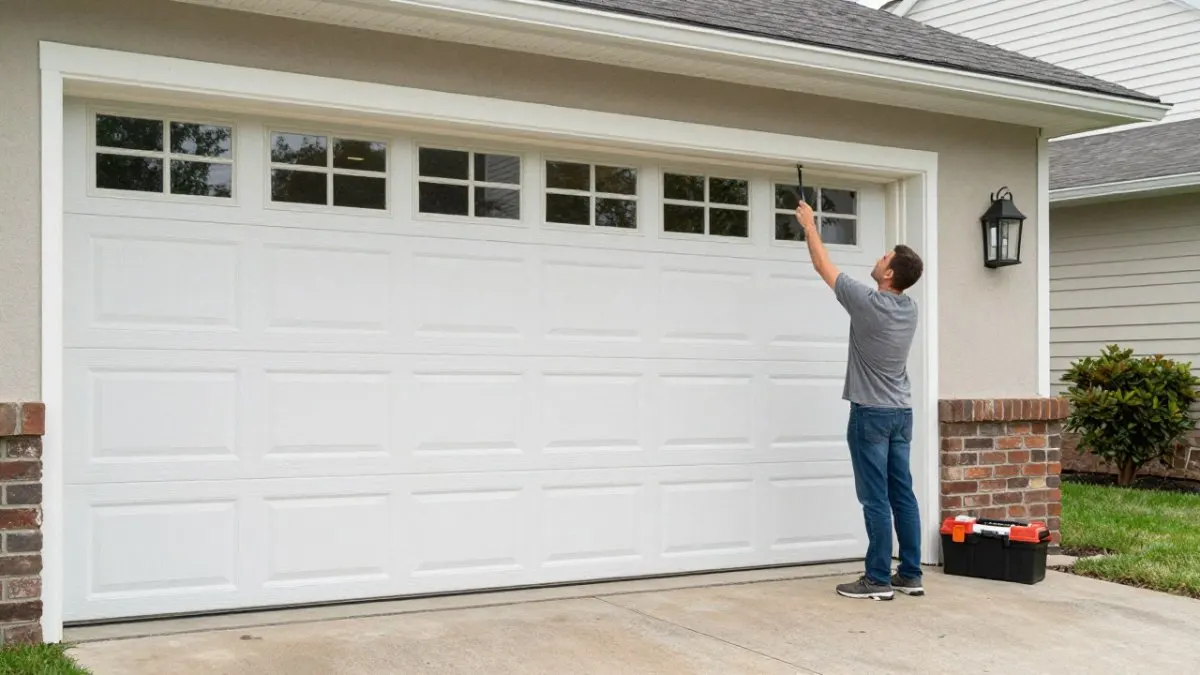
Stop using the door as soon as you see it off track. For practical first steps to take now, see our guide before calling a technician.
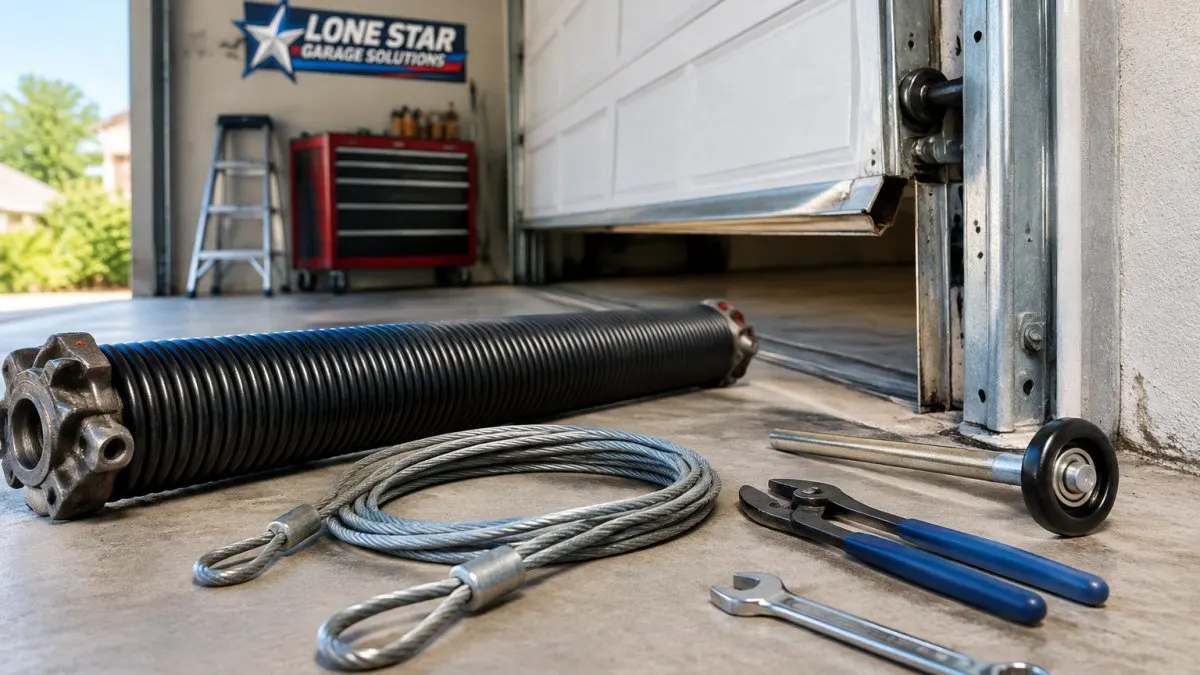
An off track repair itself usually involves checking the track alignment, rollers, cables, and springs.
Garage Door Track Repair Cost by Damage Scenario
Off-track repair costs depend on what is actually damaged, and the spread between a simple realignment and a multi-part repair is wide.
Pricing depends on labor, parts availability, and how much of the system needs work. The scenarios below separate the common repair types so you can see which one matches your door and what a quote for that scope should include.
Scenario 1: Simple Realignment (Track Still Sound)
This is the least expensive case. The door has slipped off a track that is not bent, the rollers are intact, and the cables and springs are undamaged.
The Home Depot lists track repair at $200 to $400 (The Home Depot Garage Door Repair Services), which is a reasonable published reference point for this kind of work.
Scenario 2: Bent or Damaged Track Section
A track that has been hit by a vehicle or bent by a door that jumped under load usually will not hold alignment after a simple adjustment. In this case the damaged section is replaced, not straightened.
Ask your technician whether the track can be realigned or whether it must be replaced. If you’re unsure whether your door needs same-day garage door repair service, the warning signs are a good place to start.
Scenario 3: Rollers and Hinges Worn or Broken
Worn rollers are one of the most common reasons a door drifts off track in the first place. Replacing a full set of rollers is typically a modest job when it is done alongside a realignment, because the door is already being worked on. The Home Depot lists roller repairs in its own published ranges (The Home Depot Garage Door Repair Services).
Scenario 4: Cable Damage
A frayed or snapped cable is a different repair from a track adjustment, and it usually adds cost. If cables are involved, replacing the cable and re-squaring the door in the same visit can prevent a second service call, because a door that is out of square will keep working its way off track.
Watch out: a cable under tension can snap with force. Do not attempt to repair cables or springs yourself.
Scenario 5: Spring Damage Alongside the Off-Track Repair
Many off-track doors also have a broken spring, and that changes the price. Precision Garage Doors and Gates lists spring replacement at $400 to $550 (Precision Garage Doors and Gates Off-Track Repair Cost Guide). The same guide lists roller and track fixes at $85 to $350, so a spring replacement will usually raise the total compared with a track-only repair. When comparing quotes, confirm whether the price includes the spring, the labor to balance the door, and a safety check of the cables.
Scenario 6: Panel or Section Damage
If the door came down hard or was hit by a vehicle, the bottom panel or a middle section may be dented or cracked. Panel replacement is priced by the section and depends on whether the manufacturer still makes a matching profile and color. Older or discontinued doors can require a special-order panel, which adds lead time and cost.
How to Use These Scenarios
Match your door to the closest scenario, then check that the quote you receive lists the same scope. A quote that covers only the track when the rollers are also worn is not a lower price for the same work; it is a smaller scope. Ask each company to quote the same items so the numbers are actually comparable.
The table below sums up the damage scenarios covered above, so you can match your door to the right scope before comparing quotes.
| Scenario | What is damaged | Price reference in the article |
|---|---|---|
| Simple realignment | Track still sound, slipped off | $200 to $400 (Home Depot) |
| Bent or damaged track | Track section must be replaced | Quote needed; more parts and labor |
| Worn rollers and hinges | Rollers, hinges, brackets | Modest when done with realignment |
| Cable damage | Frayed or snapped cable | $99 to $198 (Home Depot) |
| Broken spring | Spring replacement | $400 to $550 (Precision) |
| Panel or section damage | Dented or cracked panel | Priced by section; may approach new door cost |
Garage Door Repair Cost for a Broken Spring Compared to an Off-Track Repair
Many off-track doors also have a broken spring, and that changes the price. Precision Garage Doors and Gates lists spring replacement at $400 to $550 (Precision Garage Doors and Gates Off-Track Repair Cost Guide).
When comparing quotes, confirm whether the price includes the spring, the labor to balance the door, and a safety check of the cables. A quote that covers only the track may leave the broken spring unresolved.
Repair or Replacement: When Track Work Stops Making Sense
Repair is usually the right choice when the track, rollers, and cables are the only damaged parts, the panels are sound, and the opener still runs well.
Puls cites a typical back-on-track price of $125 to $150 and states that its own repair starts at $65 (Puls Garage Door Repair Prices Guide).
Delaying repairs carries real risk. A door that is off track can fall, and a stressed opener can fail.
Garage Door Track Replacement: What It Involves and What It Costs
Track replacement means removing the old track sections, installing new ones, and re-aligning the entire door. It is more labor-intensive than a simple adjustment, so expect the quote to reflect that. Parts availability can also affect timing, especially for custom or older door sizes.
If the track is replaced, ask whether the rollers and hinges are being inspected at the same time. Replacing track without checking the supporting parts often leads to another repair within a short period.
How to Compare Repair Quotes Line by Line and Book Your Repair
Most homeowners collect two or three quotes for an off-track repair and then compare the bottom-line numbers. That is the wrong comparison, because the totals usually cover different scopes. A quote that looks cheaper often leaves out the spring, the cable, or the balancing work, and the difference shows up on a second invoice. The method below is the one most practitioners use to make two estimates genuinely comparable.
Step 1: Confirm the Diagnosis Matches
Before comparing prices, check that both companies diagnosed the same problem. One may say the track only needs realignment; another may say the track section is bent and must be replaced. If the diagnoses differ, ask each technician to explain what they saw and why it leads to that recommendation. A quote built on a different diagnosis is not a competing price; it is a different job.
Step 2: Compare Scope, Not Just Totals
Put the two quotes side by side and check that each one lists the same items:
- Track work: realignment or replacement, with the number of sections named
- Rollers, hinges, and brackets, with part counts
- Cable or spring work, including whether the door will be balanced afterward
- Labor charges, listed separately from parts
- Any service-call or trip fee
- Disposal of old parts, if applicable
A lower price that omits the spring or cables is not a better deal. It is a smaller scope, and the missing work will usually be billed later.
Step 3: Check the Service-Call Fee and Labor Structure
Some companies charge a flat service-call fee that is separate from the repair, and some fold it into the labor line. Ask whether any service-call fee is credited toward the repair if you approve the work. Also ask whether labor is quoted as a flat rate for the job or as an hourly rate, because an hourly quote can grow if the repair takes longer than expected. A flat-rate quote is easier to compare against another flat-rate quote.
Step 4: Ask About the Warranty in Writing
Warranty terms vary widely and are one of the most overlooked parts of a quote. Ask what is covered on parts, what is covered on labor, and how long each coverage lasts. A company that offers a strong parts warranty but a short labor warranty is offering less protection than the numbers suggest. Get the warranty terms in writing before you approve the work, not after.
Step 5: Check Insurance and Home-Warranty Coverage Before Paying Out of Pocket
Before you pay, check whether the repair is covered by a home warranty or by homeowners insurance. A home warranty may cover a mechanical failure such as a broken spring, while homeowners insurance typically responds to sudden damage from a covered event, such as a vehicle impact. Coverage rules differ by policy, so read the exclusions and call your provider if the cause of the damage is unclear. Knowing this before the invoice arrives can change what you pay out of pocket.
Step 6: Ask About Timing and Parts Availability
Timing depends on the parts involved, so ask for an expected completion window in writing. Repairs that involve a special-order panel, a discontinued track profile, or extensive damage may take longer because the parts have to be ordered. Ask the company to give you an expected completion window in writing, and ask whether the door should stay out of service until the parts arrive.
Step 7: Book the Repair and Confirm What Happens on Site
Once you have compared scope, fees, warranty, and timing, book the repair with the company whose quote covers the full job at a fair price.
At Lone Star Garage Solutions, we aim to make each quote clear before work begins. To get a quote for your off-track door, contact us today and we will get you on the schedule.
Frequently Asked Questions
How much does it cost to repair a garage door that is off track?
Off-track repairs usually range from a few hundred dollars for a simple track realignment to higher amounts when rollers, cables, or springs also need work. The final cost depends on how much of the system is damaged, the door type, and local labor rates. Ask any provider for an itemized quote that lists each part and labor line so you can compare estimates fairly.
Is it safe to use a garage door that has come off its track?
No. A door that has left its track can drop unexpectedly, bind, or pull unevenly on its cables and springs, which creates a real safety risk for people and vehicles beneath it. Keep people and pets away from the opening, avoid operating the opener, and disconnect the opener if you can do so safely. Schedule a professional inspection before the door is used again.
Can I put a garage door back on its track myself?
Some minor misalignments can be corrected by a homeowner, but tension is the main hazard. Garage door springs store a large amount of energy, and working on them or on a door that is partly supported by its springs can cause serious injury. Unless the problem is clearly limited to a loose roller or a slightly bent track section, call a qualified technician rather than attempting the repair yourself.
What causes a garage door to come off its track?
The most common causes are a worn or broken roller, a bent or loose track section, a cable that has slipped or snapped, and an impact from a vehicle or a hard operating force. Uneven spring tension can also pull one side of the door out of alignment. Identifying which component failed helps determine whether the repair is a simple realignment or a larger job.